Yesterday YouTube Let American Fans Pay to Push Your Video Up a Leaderboard. Over 500,000 Subscribers and You Don't Qualify.
Paid Hype landed in the US on November 6 with a subscriber ceiling that locks out the big channels and hands small experts a fan-funded ranking lever.
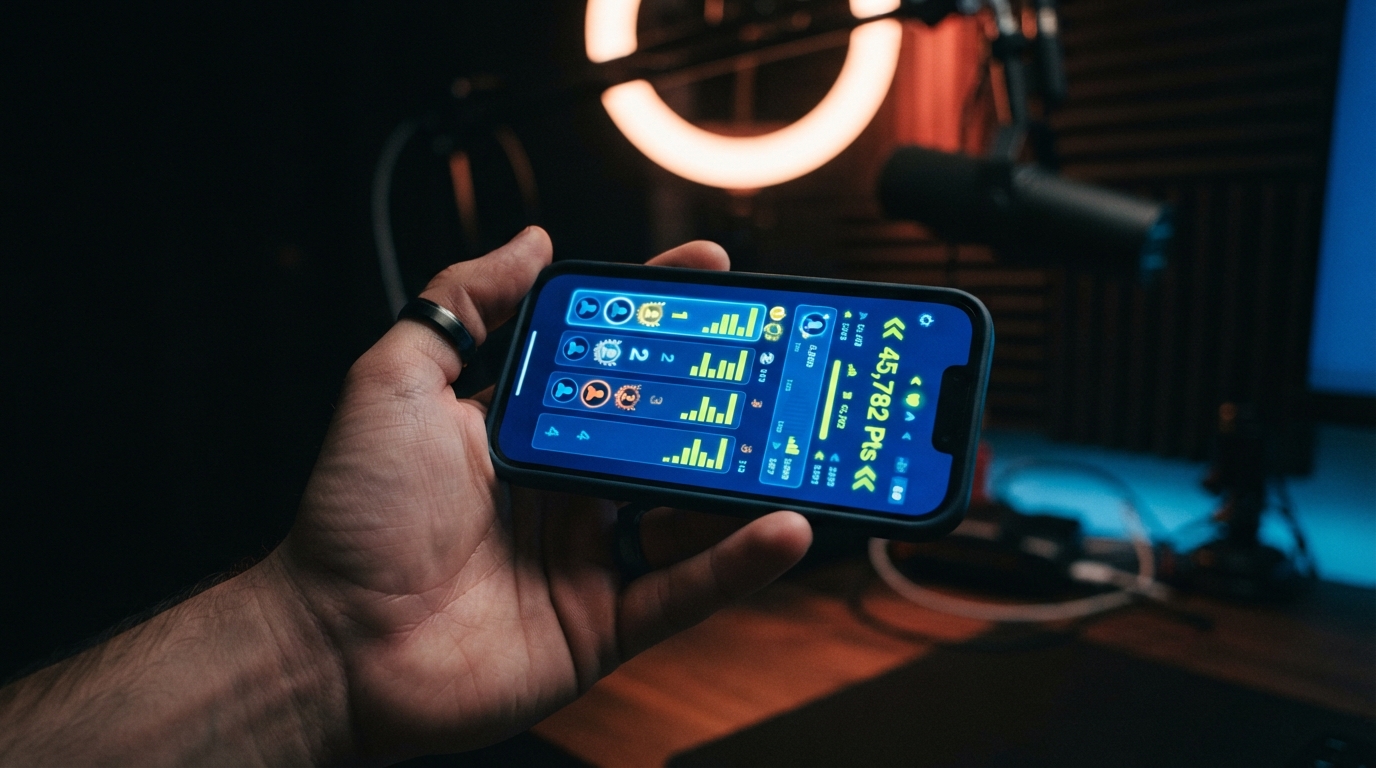
The Hype button has been sitting under YouTube videos for two years doing something unusual: nothing for the creator's wallet. A hype paid the creator nothing directly — it was purely an algorithmic visibility boost via a points system, where the fewer subscribers a creator has, the more points each hype is worth.
That changed yesterday in the United States.
On November 6, 2026, hype with Jewels expanded to the United States, Canada, Germany, Ireland, Italy, Poland, Spain, Turkey and the United Kingdom; YouTube's post says the feature launched earlier in the year in Brazil, South Korea, Taiwan and Japan. That brings the number of countries where hype can be bought to 13.
How it works now
Viewers who burn through their three free weekly hypes can redeem Jewels, paying YPP channels of 500 to 500,000 subscribers in Rubies. Each paid hype adds points toward a country leaderboard and earns the creator Rubies, a virtual currency that YouTube pays out through AdSense. Paid hypes also credit the buyer in the video description during the first seven days.
So the same tap now does two things at once: it buys you ranking, and it pays you.
The ceiling is the actual story
Read the eligibility line slowly, because this is the rare platform feature that is rigged against scale.
"Hype is designed for up-and-coming creators in the YouTube Partner Program with 500–500,000 subscribers," YouTube's help page states. "If you no longer have access to hype, your subscriber count has grown beyond this range or your channel is no longer in the YPP program."
Cross half a million subscribers and the lever disappears.
And inside the band, the weighting is brutal. YouTube's own help page gives two worked examples: a single hype on a channel with 500 subscribers puts 7,500 points on the video, while each hype on a channel with 500,000 subscribers adds 50 points. A 150x spread in favour of the smallest eligible channel.
For a course creator with 4,000 subscribers and a genuinely engaged list, that is the most favourable distribution math YouTube has ever offered. Your audience can now buy you placement at a point in your growth curve where you almost certainly cannot buy it yourself.
Videos with the most points are added to a leaderboard so viewers can find the freshest content that others have hyped. Up to 50 top hyped videos can be discovered under multiple categories, filtered by topic. The leaderboard isn't personalized and displays the same list to all viewers in the same country, updating about every few minutes.
The seven-day window is a launch window
The leaderboard shows videos uploaded within the last 7 days. Eligibility applies to long-form video only.
That is not a detail. It is a structure. Concentrated audience energy in the first week is exactly the shape of a course launch — and it is now the only shape that works here. A great evergreen video from March cannot be hyped onto anything.
What YouTube still hasn't said
The money side is half-dark. The announcement states no price per hype in Jewels, no conversion rate from Jewels to Rubies for hype, no Ruby value, and no revenue share.
The nearest published comparison is gifting. For gifts, the only other product sold in Jewels, viewers redeem two Jewels to generate one Ruby for the creator, with each Ruby worth $0.01. Whether hype uses the same arithmetic, nobody outside YouTube knows yet.
There are guardrails on how hard a superfan can go. Spending on Jewels, Super Chats, Super Stickers and Super Thanks is capped at a combined 500 US dollars a day and 2,000 dollars a week, or the local equivalent, and an account can hold at most 30,000 Jewels. The change affects YPP creators with 500 to 500,000 subscribers and viewers aged 18 and over who buy Jewels.
One more friction point for anyone planning to run this as a campaign: YouTube's official help states there is no way for creators to see who has hyped their videos, though hypes made with Jewels may appear in the acknowledgments section.
The pattern underneath
This fits a direction YouTube has been moving all year. Channels with 500 to 500,000 subscribers cover the long tail and much of the middle tier of the creator economy, and YouTube has been lowering the entry point for monetization in that tier: the Shopping affiliate program opened to creators with 500 subscribers in March, down from more than 10,000.
The implication for anyone selling knowledge on YouTube is uncomfortable in a useful way. The advantage here has an expiry date measured in subscribers. Use it while the number is still small enough to count as an asset.
Sources
- YouTube creators in US, UK and 7 more markets gain income from paid hypes — PPC Land
- Hyping videos eligibility, availability & policies — YouTube Help
- Leaderboard for hyped videos on YouTube — YouTube Help
- YouTube creators gain income as fans spend Jewels after 3 free weekly hypes — PPC Land
- YouTube Hype: The New Fan-Powered Discovery Feature and What It Means for Emerging Creators — Make Influence
- [2026 Edition] The Complete Guide to YouTube 'Hype' — note
Editor’s note: A brand-new US distribution lever that is explicitly engineered to favour small-audience experts — and switches off the moment you get big.
Keep reading
YouTube Just Doubled What a New Channel Needs. Everyone Already Monetized Has a January 31 Deadline.
The entry bar for ad revenue goes from 4,000 watch hours to 8,000 on February 1. For course creators, the real story is what didn't change.
The Government Said This Coaching Company Took $65 Million on Promises It Couldn't Prove. The Refund Pot Was $2.5 Million.
The FTC's case against business-coaching seller Lurn is the clearest public document anyone selling courses has on where the earnings-claim line sits.
YouTube Just Moved the Subscribe Button Out of the Way. Then It Started Paying Creators for Showing Up.
Two October announcements, one direction of travel: the subscription relationship got demoted, and frequency got a paycheck. Course funnels built on "hit subscribe" should pay attention.
TikTok Built an AI That Works Your DMs. Qualifying the Lead Was Supposed to Be Your Job.
TikTok's new Agentic Leads agent holds the qualifying conversation that course sellers have run by hand for years — and no one has said what it costs.